AI Content Creation
Your AI produces content. But is it performing?
Eskimoz App frames AI content creation with a proven, performance-driven approach to turn every piece of content into a growth opportunity.
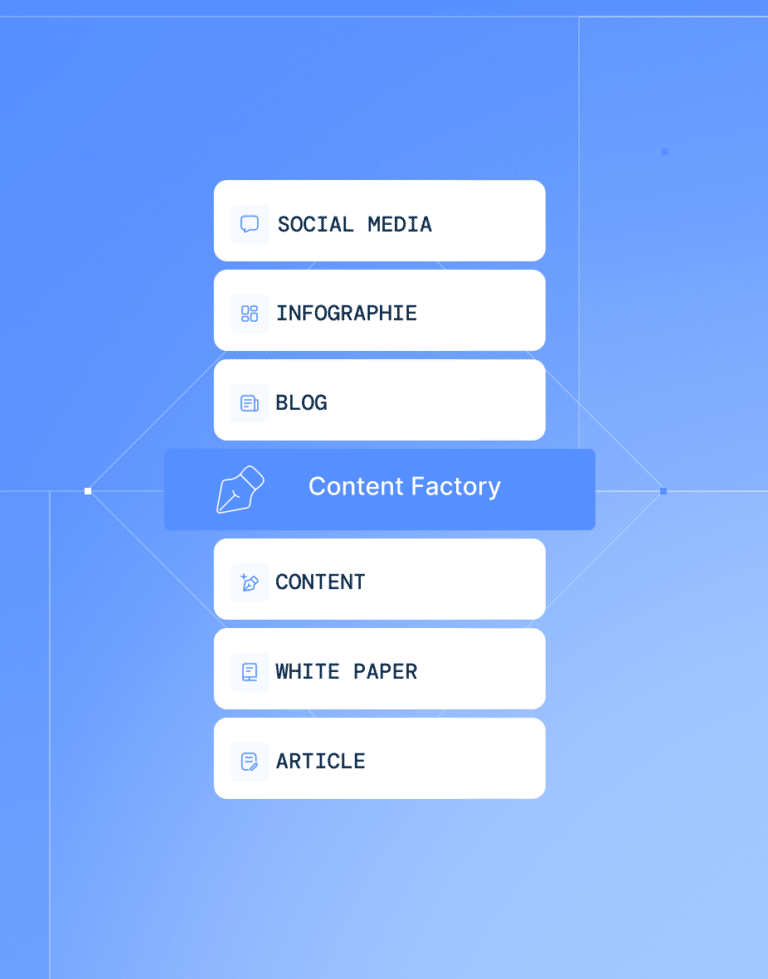
Without a methodological framework, AI generates volume — not performance.
With Eskimoz App:

Easy to Produce, but Often Ineffective
Creating content with AI has become accessible to everyone. The problem is that everyone is doing the same thing. The result: a proliferation of quick, surface-level content that is generic, interchangeable and poorly aligned with what users are actually looking for.
Even when well-written, this content misses the point — failing to precisely match search intent and compete against already well-established pages in the SERP. The challenge is not to write faster with AI. It is to produce content that is useful, distinctive and genuinely high-performing.
Eskimoz App
4 tools working together to scale high-performing content creation.
Scribe
Write and optimise your content for SEO and GEO, drawing on real SERP data — not assumptions.
Discover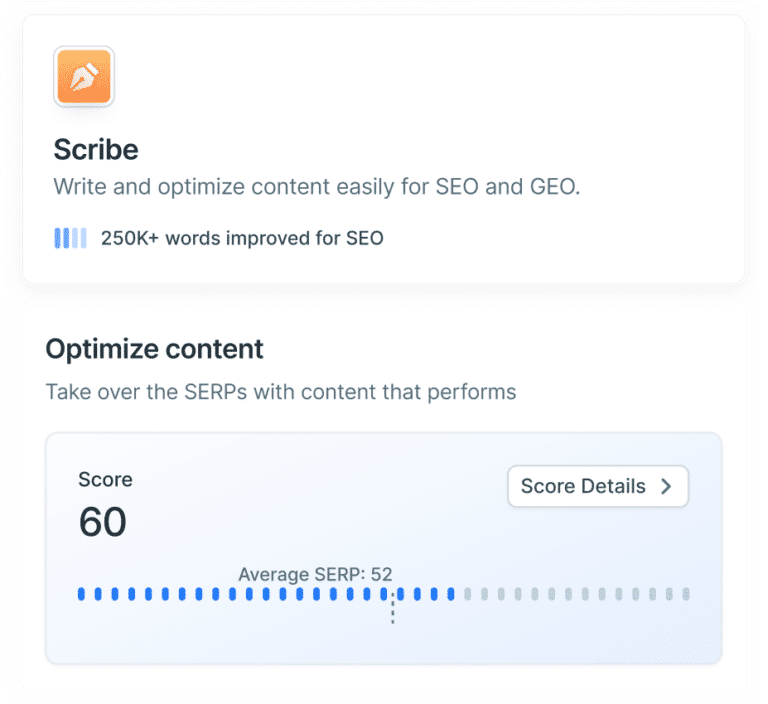
Search Agents
Run over 40 specialist AI agents to produce, enrich and repurpose your content at scale, without sacrificing consistency.
Discover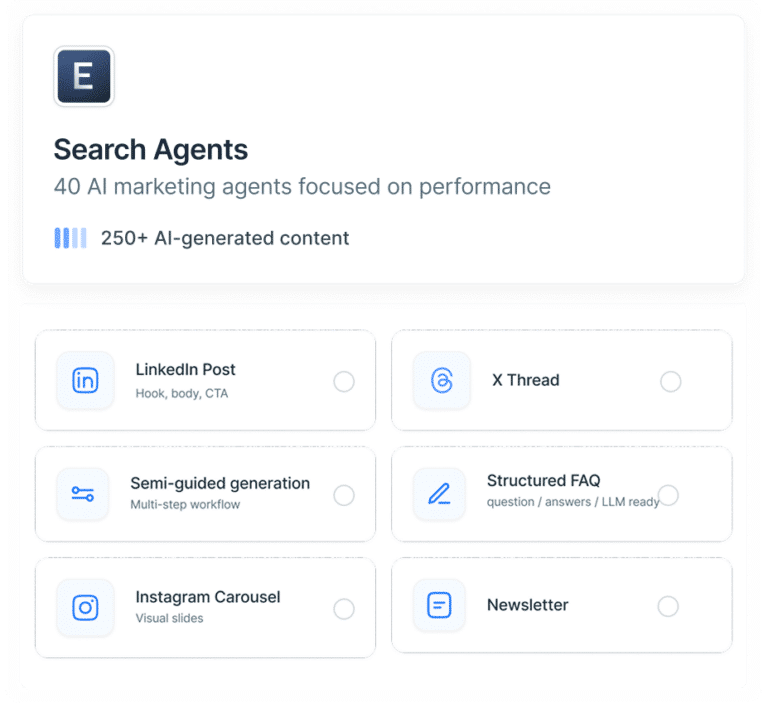
Performance
Measure the real impact of your content on traffic, conversions and business contribution — page by page.
Discover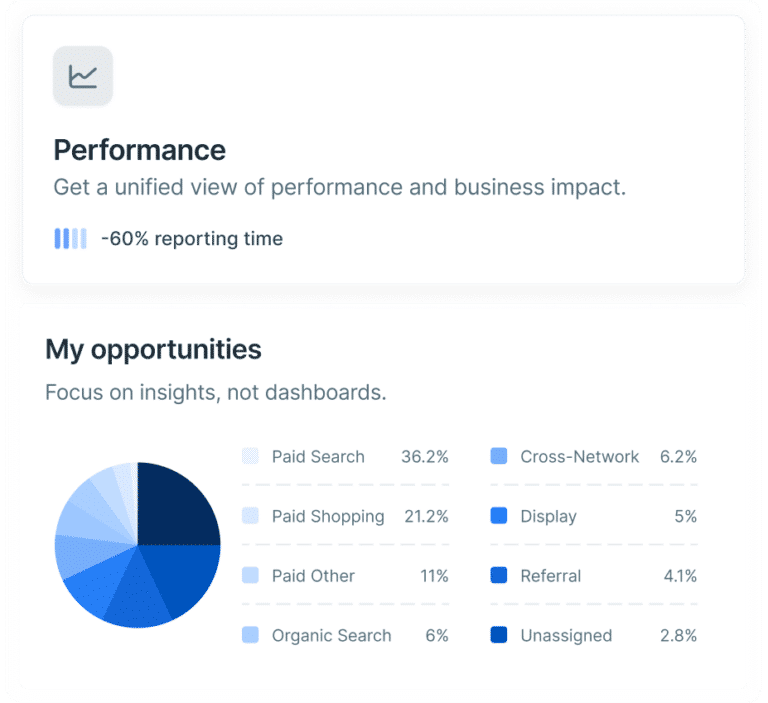
Omnichannel
Analyse the contribution of your content across all your marketing channels to make joined-up investment decisions.
Discover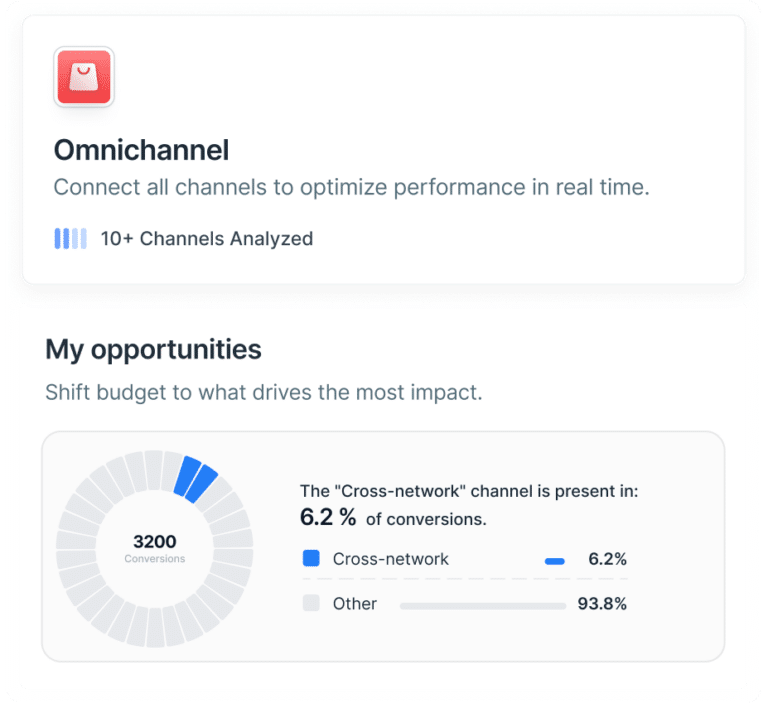

5 steps to create high-performing content with AI

Create efficiently.
FAQ
Is AI enough to produce high-performing SEO content?
No. AI accelerates production, but without a methodological framework it mainly generates generic content. Performance relies on SERP analysis, intent understanding and quality control at every stage. AI becomes effective when guided by a structured method.
Why does AI-generated content not always perform?
Because it often covers a topic superficially without precisely answering the search intent. Without depth, a distinctive angle and E-E-A-T signals, it remains interchangeable and struggles to hold its own against better-constructed pages.
How do you avoid cannibalisation with AI?
Cannibalisation occurs when multiple pieces of content target the same intent without coordination. A clear keyword and page map allows it to be anticipated. Scribe identifies and flags these situations before they become a problem.
How do you produce at scale without degrading quality?
By combining Scribe and Search Agents: Scribe frames the strategy and controls quality; Search Agents scales production. Every stage remains structured, from analysis through to validation.
How do you know if a piece of content is truly performing?
Performance is measured on concrete indicators: traffic generated, CTR, conversions and revenue contribution. A piece of content that does not generate qualified visibility is not performing — regardless of its writing quality.
How long before you see results?
The first effects on rankings and traffic can appear within a few weeks. The full business impact takes longer to measure, depending on the competitiveness of the targeted keywords and Google’s crawl frequency.
Does AI replace editorial teams?
No. AI handles production, but strategy, prioritisation and validation remain the remit of human teams. It is their expertise that ensures the consistency, relevance and distinctiveness of content.
How do you integrate E-E-A-T signals with AI?
E-E-A-T signals must be deliberately incorporated: concrete case studies, demonstrated expertise, trusted sources, editorial consistency. AI can structure these elements, but their relevance depends on a clear strategic intent set upstream.
How do you link content to business impact?
Performance and Omnichannel connect each piece of content to its real results: traffic, conversions, revenue contribution. You have a clear picture of what is working and what is worth optimising.
How do you avoid producing unnecessary content?
By starting with prioritisation. Every topic must respond to a genuine intent, sit within the overall strategy and have an identified SEO or business potential. Content without a defined objective should not be produced.