Optimising Your SEO / PPC Synergy
Are your SEO and PPC budgets really working together?
Eskimoz App unifies your two acquisition channels to eliminate duplication, seize missed opportunities and maximise every pound invested.
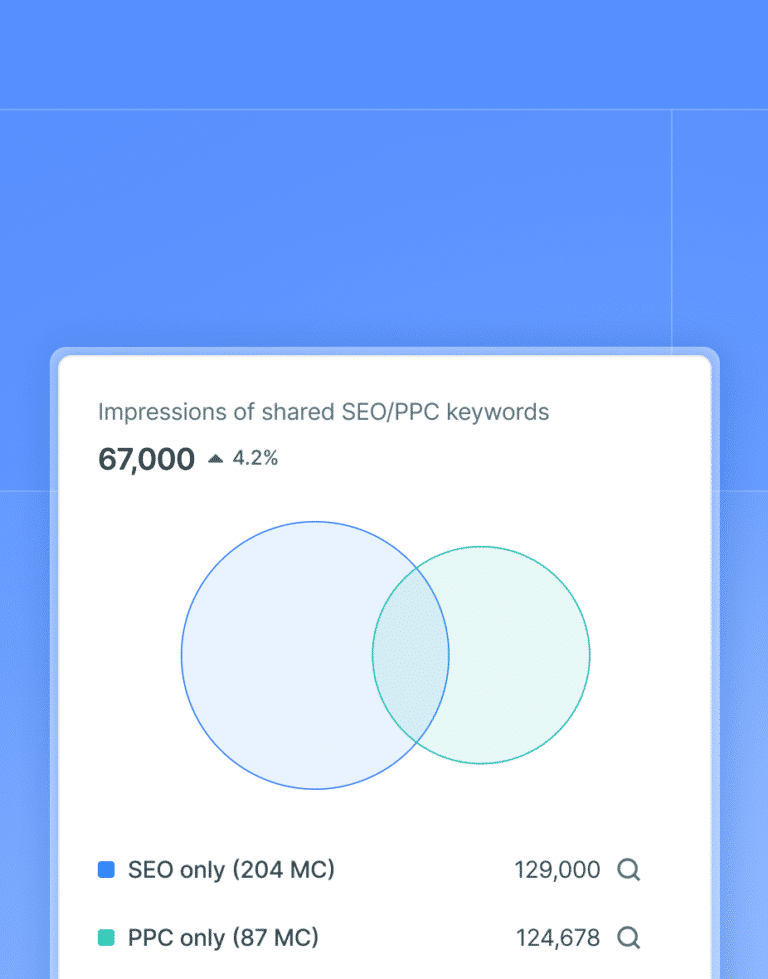
Without unified management, allocation decisions become guesswork.
With Eskimoz App:
Two Channels Still Too Often Managed in Silos
Most businesses invest in both SEO and PPC. Few of them know precisely how these two channels influence each other. Result: PPC gets cut too early and sales are lost. Paid campaigns are maintained on keywords already dominated organically. Decisions are made by feel, in the absence of consolidated data.
The SERP has changed fundamentally. Ads, Shopping, PAA and AI Overviews all reduce the real visibility of even strong SEO. The challenge is no longer to choose between SEO and PPC — it is to understand how to make them work together, based on the real context.
Eskimoz App
4 tools working together to make SEO / PPC synergy manageable.
Unify
Visualise the real complementarity between SEO and PPC, identify untapped opportunities and measure cannibalisation keyword by keyword.
Discover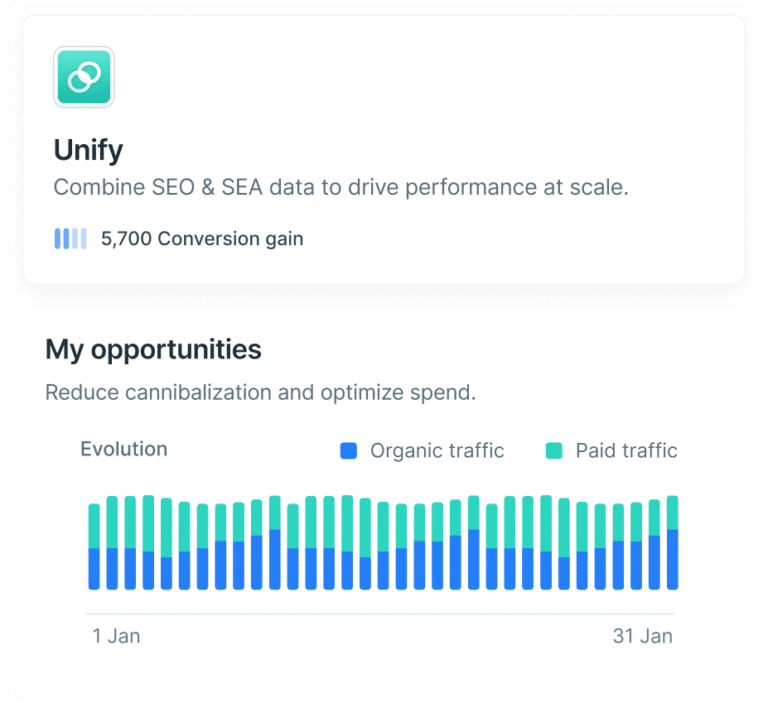
Monitoring
Track your SEO rankings in real time and analyse the SERP to anticipate traffic fluctuations before they affect your results.
Discover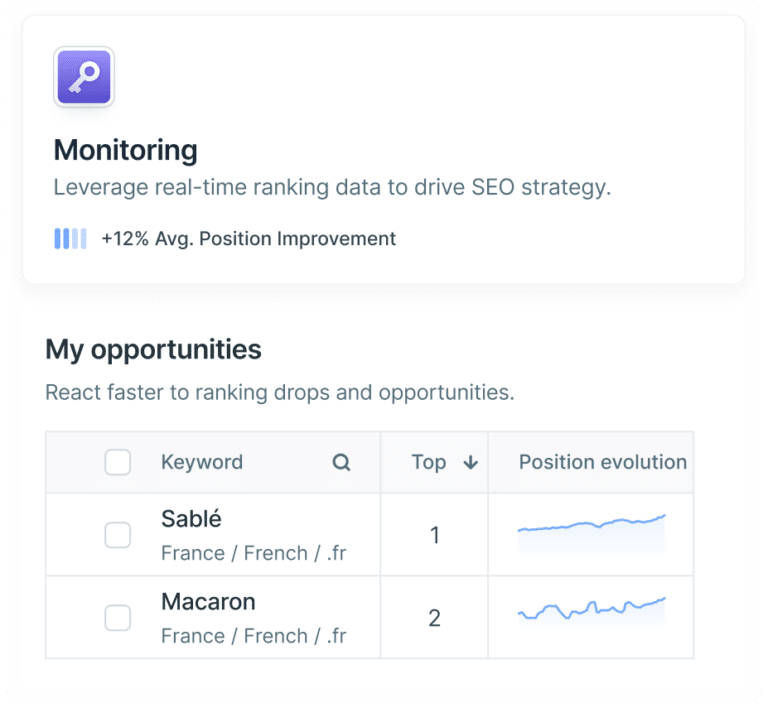
Performance
Measure the concrete business impact of each decision: traffic, conversions and revenue, across both channels simultaneously.
Discover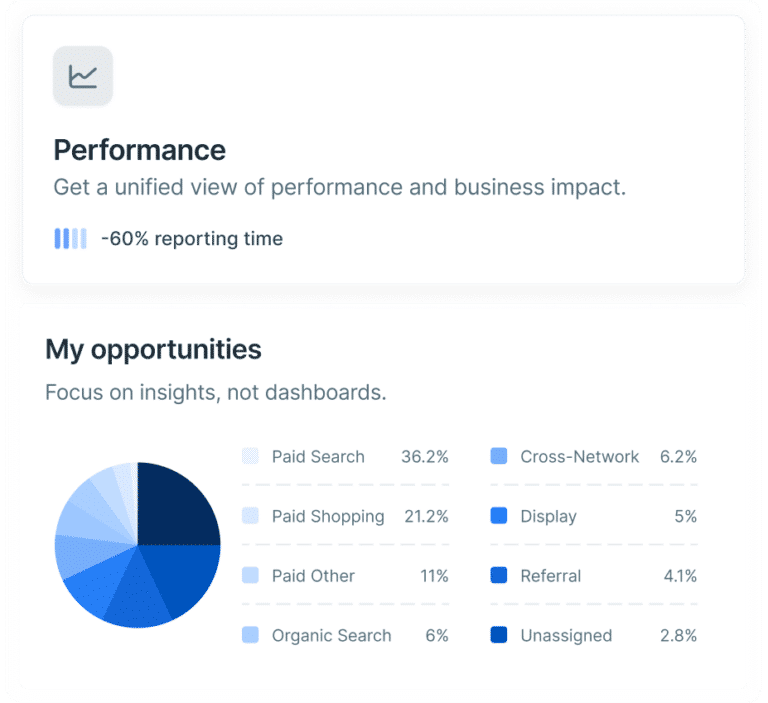
Omnichannel
Access a consolidated view of all your channels to make joined-up decisions, without working in silos.
Discover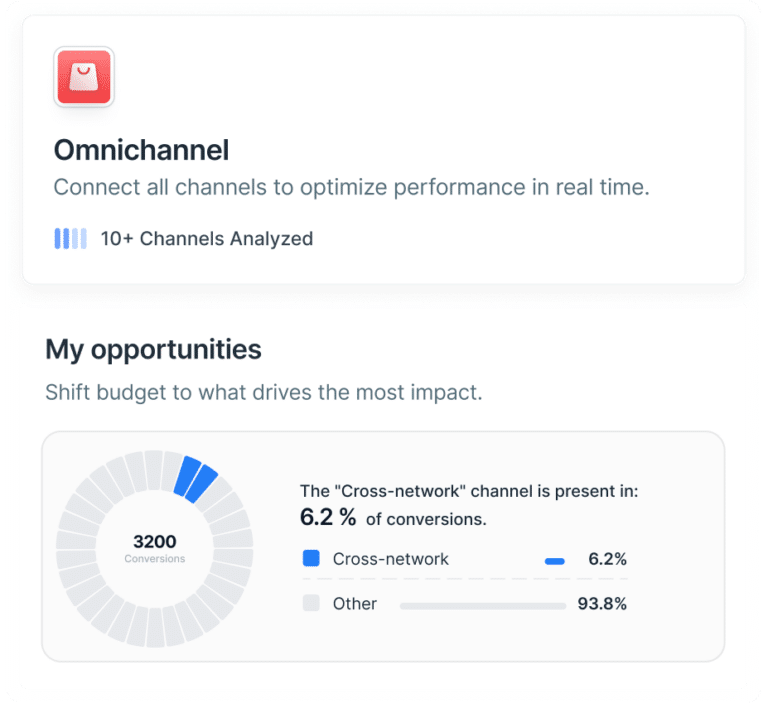

5 Steps to Optimise Your SEO / PPC Synergy

Optimize your budgets
FAQ
Should I favour SEO or PPC?
SEO and PPC serve different but complementary purposes. SEO builds a lasting, cost-effective presence over the long term. PPC delivers immediate visibility where organic reach is not yet sufficient. The goal is to use each channel at the right moment, based on where you have coverage and where competitive pressure demands it.
How do I know if PPC is duplicating my SEO?
When SEO is already capturing a significant share of clicks on a keyword, maintaining a paid campaign on that same term amounts to paying for traffic you would have received for free. Unify compares CTR, impression share and conversions across both channels to identify these cases and quantify what they are actually costing.
Why is strong SEO not always enough?
Because the top organic position is no longer the first thing a user sees. Ads, Shopping, Featured Snippets, PAA and AI Overviews all push organic results further down the page. On certain high-value queries, PPC remains essential for maintaining visible presence — even with excellent SEO rankings.
How do I prioritise SEO vs PPC actions?
Prioritisation is based on three combined signals: real SEO performance (actual position and CTR), competitive pressure on paid, and the business potential of the keyword. High-value keywords with low organic coverage take priority — activating the most relevant channel based on the context.
How do you measure good SEO / PPC synergy?
Effective synergy is not read channel by channel — it is measured in overall results: increased qualified traffic, stable or improving conversions, reduced overall acquisition cost. The goal is not to spend less on one channel, but to spend better across all of them.
How do I know if my allocation decisions are working?
By measuring the before/after impact on business KPIs — not on isolated channel metrics. A successful optimisation maintains or improves overall revenue, even if it reduces one budget line. Performance allows this to be verified continuously.