Snack Content: Getting Straight to the Point!
Snack content is the art of producing concise and easily consumable content without compromising on quality. It’s the perfect fuel for your social media channels!

What is snack content and what are its benefits?
In marketing, there’s long-form content, essential for website/blog optimisation, search engine rankings, and generating traffic, and then there’s short, easily digestible content tailored for social media and mobile usage, designed to grab attention and encourage engagement. This marketing technique is known as snack content (or “micro-content” strategy). It involves creating impactful content meant to be consumed on the go and administered in small doses throughout the day. It’s like having a snack between meals to satisfy your hunger.
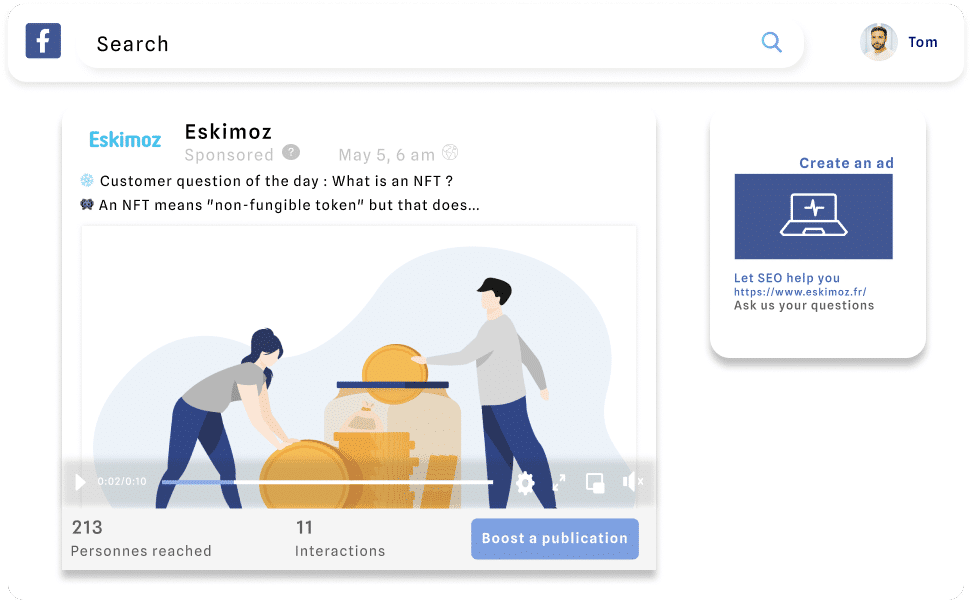
What is snack content?
Snack content has particularly taken off on social media platforms that thrive on sharing concise, highly shareable content. Micro-content is designed to be quickly consumed and generate interest in minimal time, making it very “social-friendly.” However, its use is not limited solely to social media. Snack content also works well for blogs, allowing for frequent updates with fresh content, providing an interesting (and cost-effective) alternative to longer and more complex content that requires more resources to produce. Moreover, concise content doesn’t necessarily mean poor quality content!

Why use snack content in marketing?
Because internet users appreciate short, easily digestible content that doesn’t require sustained attention. As user behaviour evolves, more people are accessing the internet on the go. The brevity of snack content aligns with modern lifestyles and consumption habits. Additionally, companies and brands can’t afford to ignore the importance of a strong social media strategy. For all these reasons, snack content is a powerful tool for increasing brand visibility, standing out from the competition, driving engagement, and even fostering customer loyalty. It offers flexibility by complementing longer content pieces and seamlessly integrating into an existing content marketing strategy. Snack content is addictive, enabling businesses to build a loyal audience, maintain an engaging editorial schedule, and create anticipation. It’s also a practical approach to breaking down messages, making them easier to absorb and allowing for multi-channel distribution.
Snack content vs. slow content
Snack content
Slow content
Content reserved for social media?
Content with many faces
Snack content doesn’t refer to a specific content format, but rather a marketing methodology. Engaging in content snacking isn’t just about posting on Facebook or Instagram and tweeting all day – although these examples are crucial aspects of this approach. In reality, the content can take various forms, regardless of the chosen publishing platforms (social media, blogs, or others). However, they all have one thing in common: they are characterised by brevity, capturing attention, evoking emotions, and delivering simple messages.
Different snack content formats

Finding the recipe for successful bite-sized content
Snack content isn’t just about churning out short pieces; it requires creating content that is impactful, relevant, engaging, high-quality, and has strong viral potential. The challenge lies in capturing the attention of internet users by offering content that elicits a response as they scroll through their feeds and motivates them to take action. However, when it comes to producing social content, advertisers face four significant challenges: volume (the demand is ever-increasing), quality (algorithms favour high-quality content), speed (being responsive to current events is crucial), and budget (ensuring profitability). For these reasons, the practice of snack content creation should be part of a well-thought-out strategy.
Producing impactful, viral, and engaging snack content
10 tips for producing effective snack content:

Sharing short content and measuring its impact
Snack content is a great way to capture attention and engage your audience, while also driving users to explore other platforms such as your website or blog. These platforms offer longer, more comprehensive content to address their specific needs. Remember, while a snack can temporarily satisfy, it can never replace a full meal!
Choosing the right distribution channels: a key step
The success of a snack content strategy relies not only on the content itself but also on the chosen channels for distribution. While snack content is well-suited for social media platforms, it’s important to remember that each platform caters to a specific audience type—be it young or older, B2B or B2C. Consequently, GIFs featuring kittens may not resonate well on LinkedIn, while technical infographics have no place on Snapchat or TikTok. Therefore, it’s crucial to select the platforms that best align with your targeted audiences, which requires a deep understanding of both the audiences and the platforms. A recommended approach is to develop your strategy by identifying the social media platforms most frequently used by your intended audience and focusing on one or two platforms that make sense.
How to measure the impact of snack content
Once short-form content is shared on social media, it’s important to measure its performance to evaluate the campaign’s effectiveness. What are the key metrics to consider?
Number of views
This metric indicates the organic reach of a post (how many times it has been viewed) without determining if the content has actually been read or consumed.
Number of interactions
This refers to the number of times users have engaged with your content, such as liking, commenting, or sharing. It serves as a good indicator of content quality.
Engagement rate
This metric reflects the interest of users in a post and indicates its relevance. It is calculated based on the ratio of the number of views to the number of interactions.
Number of subscribers/followers
An increase in the number of subscribers/followers following a post indicates that users appreciated it. This metric also demonstrates broader visibility gained on the platform.

The risks of snack content
Despite all its advantages, this practice is not without risks. When used improperly, snack content can be risky: useful content becoming trivial, a drift towards superficiality, a tendency to blend in with the crowd by overexploiting trends, or compromising quality for quantity… This can lead to channel congestion, loss of audience attention, and a devaluation of the company’s or brand’s message. To protect against these pitfalls, the production of short-form content should always be part of a comprehensive strategy, alternating with longer and more expert content—a blend of styles that demonstrates balanced and accurate communication—and staying true to its objectives: capturing volatile targets and engaging them with the aim of directing them towards owned media. And that, my friend, is a job for professionals!
Our Commitment
Expertise
Since 2010, we have worked with over 2000 clients across 90 countries.
Passion
We are a team of passionate, industry-focused individuals who are committed to your success.
Performance
We’re committed to implementing a data-driven strategy, making a real impact on your bottom line by providing avenues for growth.
Any questions?

Let’s talk