Global Search: The future of online search

admin
What if online search evolved faster than Google? This is the reality we’re facing today: search marketing is no longer the sole domain of the Mountain View tech giant. Global Search refers to an advanced approach to search, one that embraces a multi-channel strategy to maximise visibility of a brand or content. It goes beyond traditional search engines, encompassing social platforms, marketplaces, voice assistants, and on-site search engines. At the heart of this lies Search Everywhere Optimisation (SEO), which is the practice of optimising digital presence across all user entry points where search occurs.
Definition: What is Global Search?
Three key insights emerge:
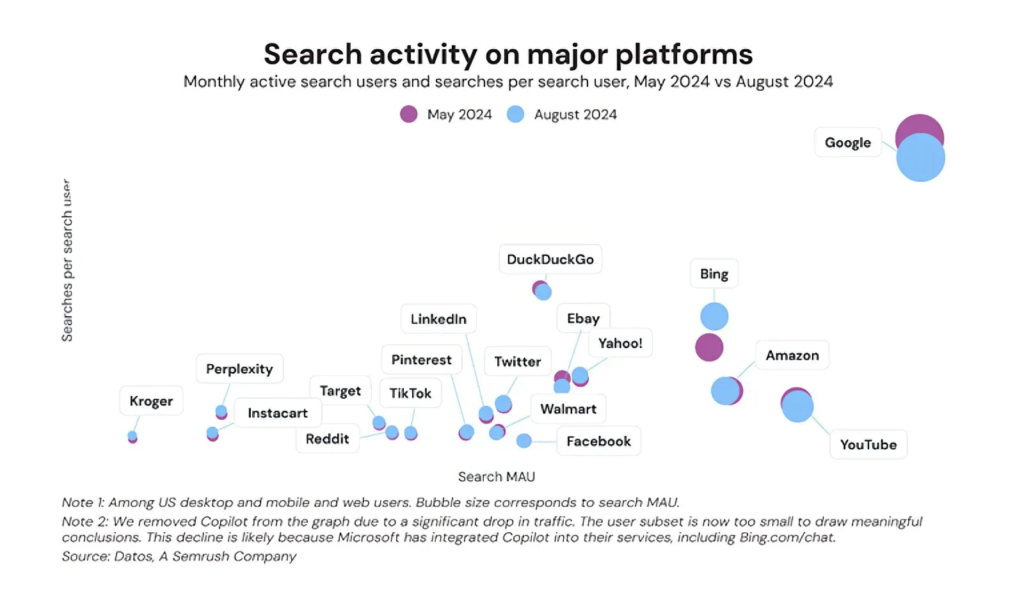
- Bing is no longer Google’s true rival, having been replaced by Amazon and TikTok, which increasingly capture and hold user attention.
- It’s users’ behaviours, not necessarily technology, that drive the evolution of search. Voice search and tools like Google Lens, for instance, have yet to gain real traction.
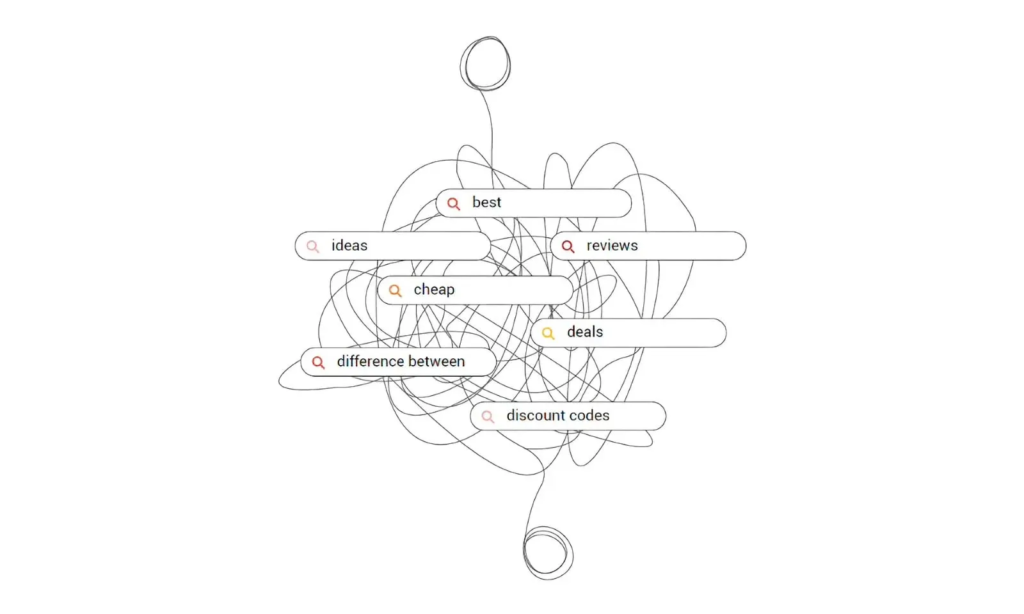
- The linear customer journey is outdated. It has given way to the “messy journey” – a dynamic, non-linear web of interactions across multiple platforms.
This shift is gradually being recognised by marketing leaders. According to the latest Botify survey, 62% of CMOs view the diversification of search channels as a key challenge in the sourcing strategy. Among emerging platforms, the most frequently cited were YouTube (66%), ChatGPT (56%), Amazon (45%), and TikTok (40%).
Will this evolution bring any side effects?
One persistent myth is the idea of total technological replacement, in that each new medium renders the previous one obsolete. Print gave way to cinema, then to radio, followed by TV, and finally the internet.
The reality, however, is that platforms simply overlap; they don’t disappear.
For marketing teams, two immediate consequences arise:
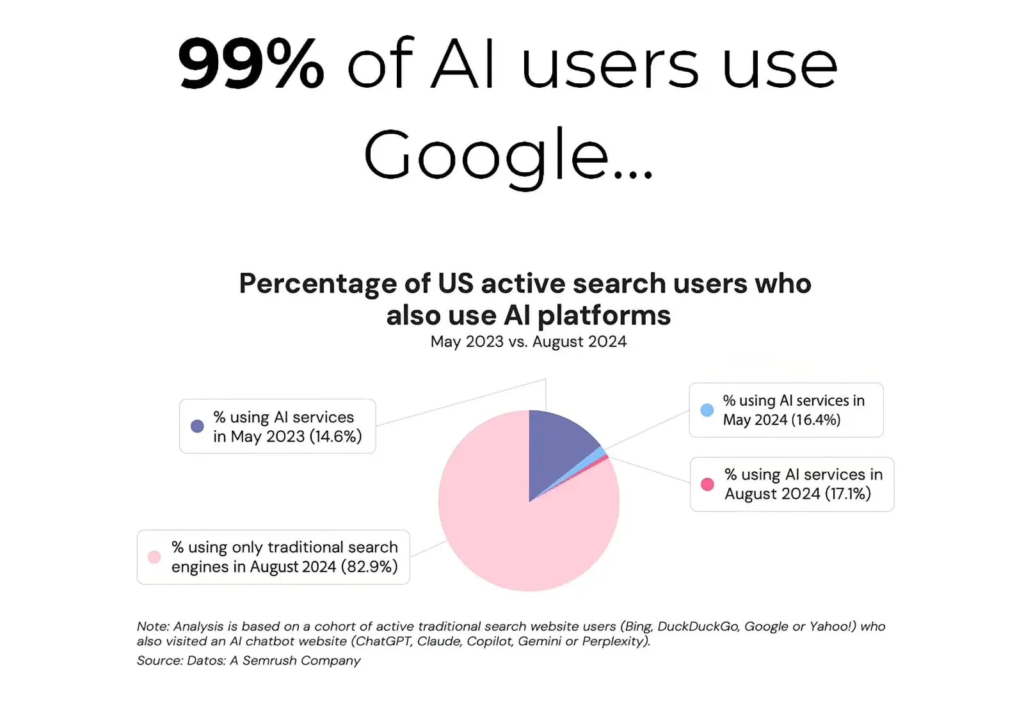
- Google remains a fundamental pillar of any search strategy.
- Search now extends far beyond Google, incorporating a range of key platforms.
So, how can we strike the right balance between these forces?
Is Google still the leader in search?
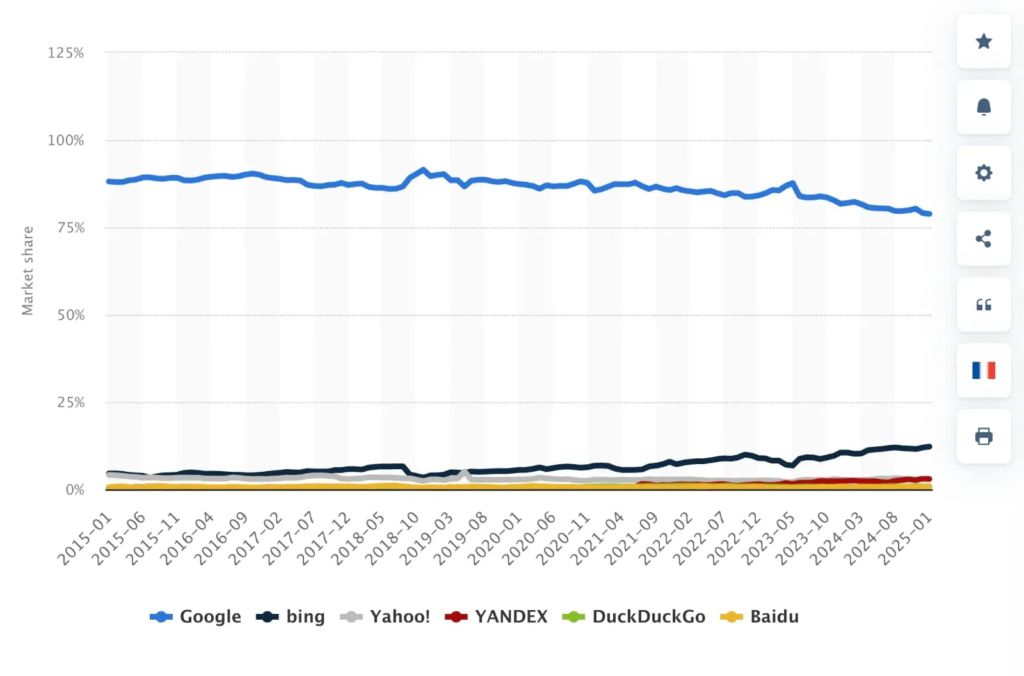
For the first time since 2015, Google’s global share of the market has dropped below 90%. On desktop, it accounts for just 75% of queries. While these figures would be impressive for any competitor, they’re far from ideal for Google.
Despite double-digit growth this year, Google’s share of global search marketing spend has fallen below 50%.
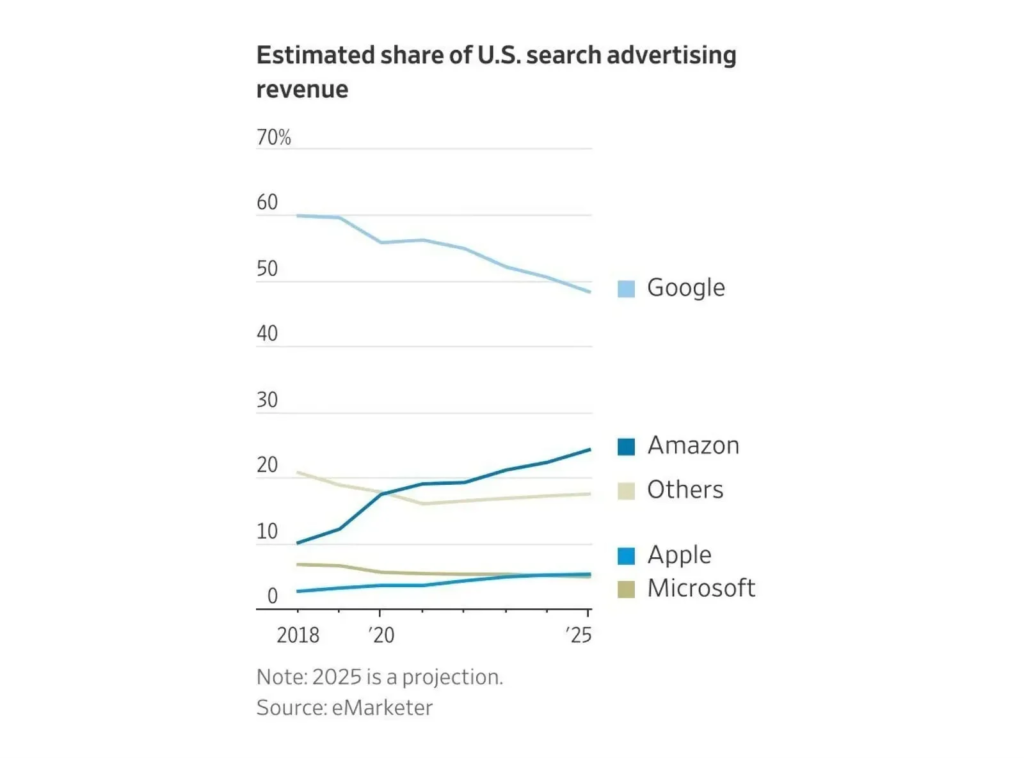
Doubts are growing. A recent Scorpion survey reveals that over 50% of users feel they now have to spend more time searching on Google to find answers, and only 10% consider its paid ads relevant. These findings challenge long-held assumptions.
That said, Google still leads in user satisfaction, scoring an index of 81 – significantly higher than other social platforms. It continues to dominate digital ad spend thanks to its unmatched ROI.
This model works as long as users remain captive within the search engine – but for how much longer? The signs are there: it’s time to rethink search strategies with a broader, platform-inclusive mindset.
Meta & TikTok: the new marketplaces
Social media platforms have long been hubs of user activity, but recent years have seen them transform. TikTok is perhaps the most striking example.
These platforms are increasingly viewed as search engines. Once consumed passively, content is now actively searched: more than 50% of users under 45 use TikTok as a search tool, and 10% of Gen Z prefer TikTok to Google – especially for lifestyle, fitness, and food content.
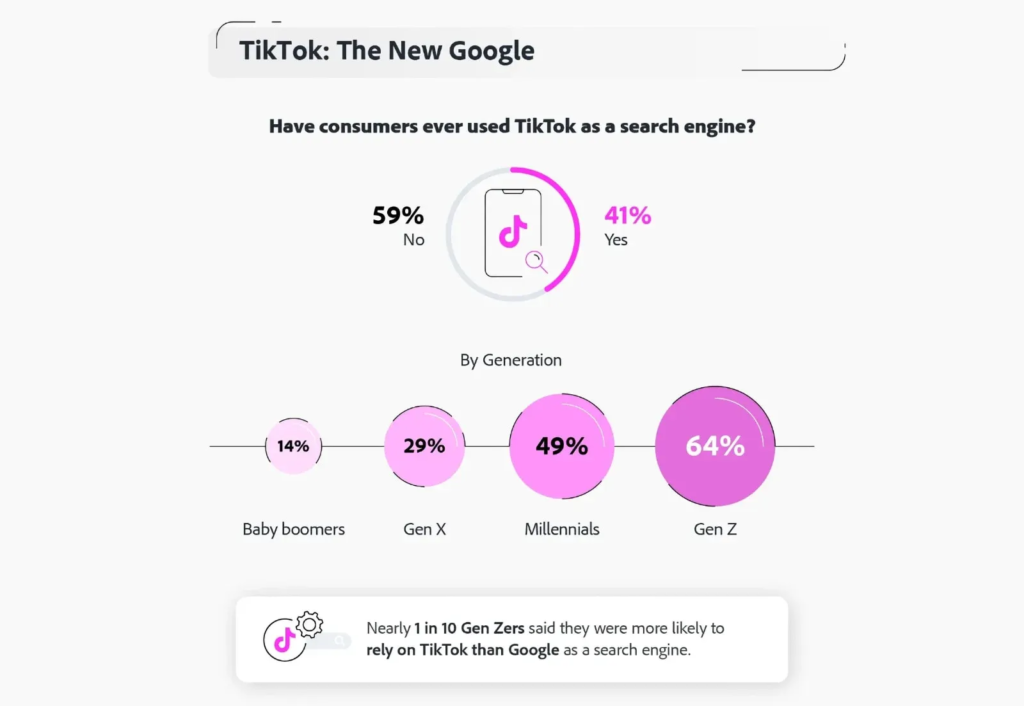
These social networks are no longer just sources of influence but have become conversion platforms themselves. Meta’s integrated marketplace, along with its 2023 partnership with Amazon, now allows direct purchases via Facebook and Instagram.
Meanwhile, TikTok Shop (as yet unavailable in France) supports end-to-end shopping without leaving the app. In 2024, the platform counted over 200 million active buyers.
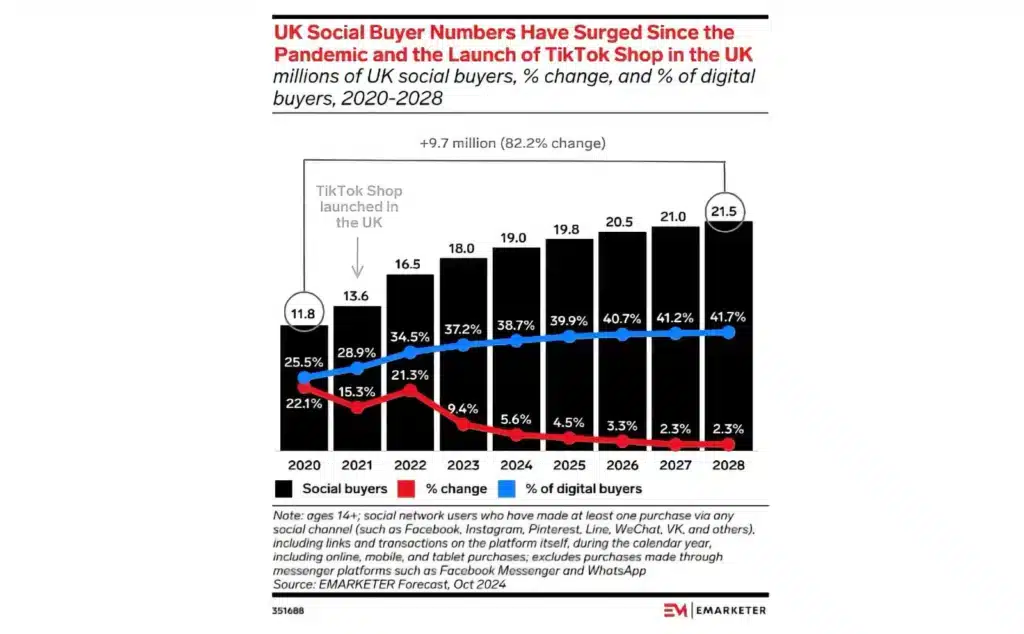
These are all shifts largely occurring outside Google’s direct influence. Aware of this trend towards platform-driven usage, Google has begun integrating social content into its search results, such as Tweets, LinkedIn posts, Reddit threads, and TikTok videos, all appearing on the main SERP under the ‘video’ tab.
This trend will only intensify with the rollout of AI Overviews in France, pushing brands further towards a unified approach that goes beyond classic SEO and SEA, and includes outbound strategies on social platforms.
Are marketplaces becoming less dependent on Google?
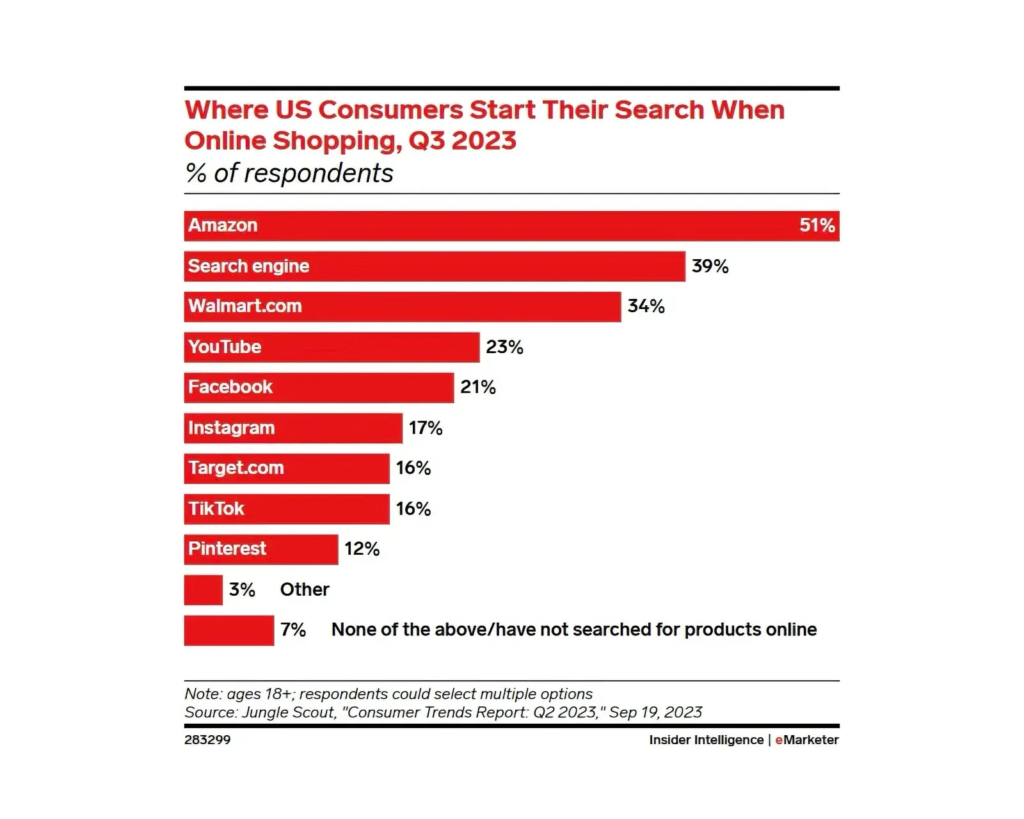
A telling statistic: 65% of French consumers said they intended to start their Christmas shopping on Amazon.fr, according to a 2023 YouGov study. In the US, one in two consumers now begins their product search on Amazon, 15 points ahead of Google. This represents a real paradigm shift, with a duopoly now clearly taking shape.
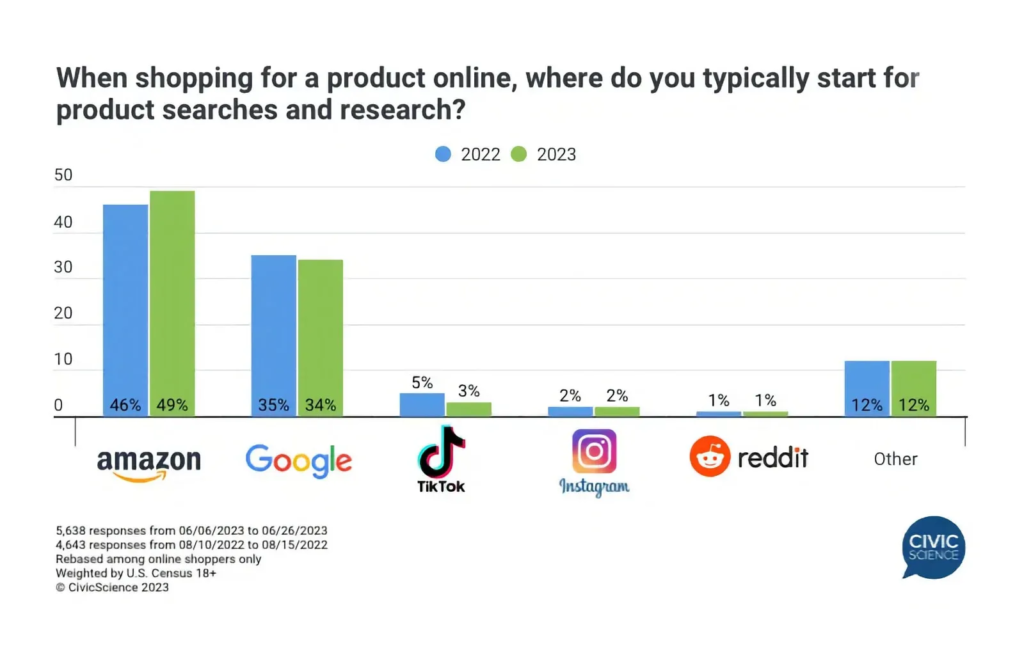
But can we truly say marketplaces are independent of search engines? Not quite.
Retail media generated $123 billion in revenue last year, more than double what it brought in five years ago. Yet Google isn’t falling behind: its Shopping formats, both organic and paid, brought in $168 billion for Sundar Pichai’s firm in 2023 alone, providing a viable route for traditional retailers.
And it shouldn’t be forgotten that Amazon is now the single largest buyer of Google Ads, appearing in over half of auctions.
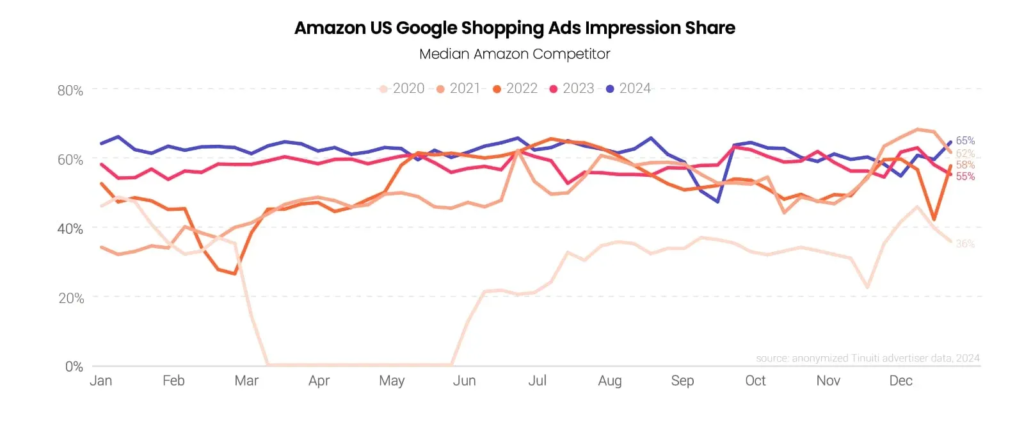
For advertisers, this means having a presence on Amazon and similar platforms is essential for capturing conversion-ready traffic – while still leveraging the visibility that Google’s SERP provides.
Gen AI search engines – are they really a force to be reckoned with?
Studies vary on the true impact of generative AI-powered search. SimilarWeb suggests ChatGPT commands 4% of search traffic, but BrightEdge puts the figure closer to 1%. So who’s right?
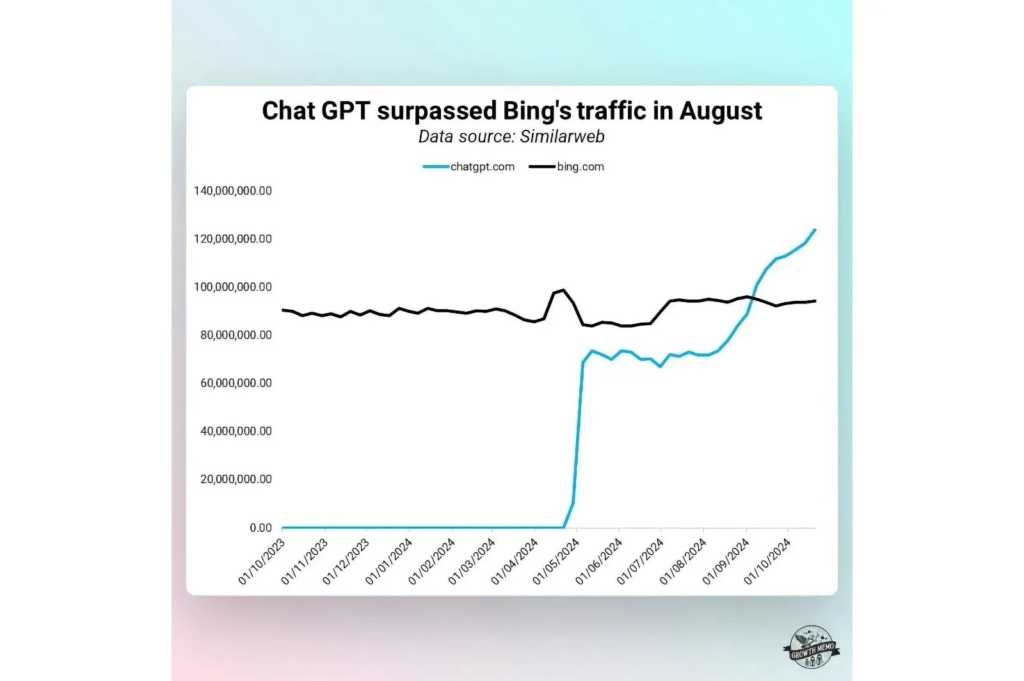
Frankly, the exact figure is less important than momentum. OpenAI now generates 1.6 billion visits per month, representing just 1.8% of Google’s total traffic. But it’s ten times higher than a year ago.
In short, there’s no immediate need for advertisers to incorporate Gen AI-based search into their broader marketing strategy, but early signs suggest they’ll play a much more important role in the near future.
As seen with social media, early adopters stand to benefit the most. The sooner brands test, refine, and measure these new channels, the greater their competitive advantage will be.
Google is already adjusting course with AI Overviews, prioritising content quality, multi-format assets, and subject matter expertise – sometimes at the expense of traditional SEO rankings.
Conclusion
In an age of platformised search, marketers must reinvent themselves to maintain relevance and leadership.
That means:
- Bringing brand and acquisition teams closer together.
- Rethinking content production across formats (including text, visuals, video, research, barometers, testimonials, and so on).
- Viewing social and e-commerce platforms as critical levers of search marketing.

Need to talk with an expert?